
Why Bowl Size and Attachments Matter (Quick Primer)
I’ll save you mistakes I made: wrong bowl, ruined dough, messy counter. The right bowl size affects mixing performance, recipe yields, storage, and cleanup.
Attachments change outcomes — whisk, paddle, dough hook — each has a clear job. Read on and I’ll help you choose what actually matters for your kitchen. Quick, practical guidance today.
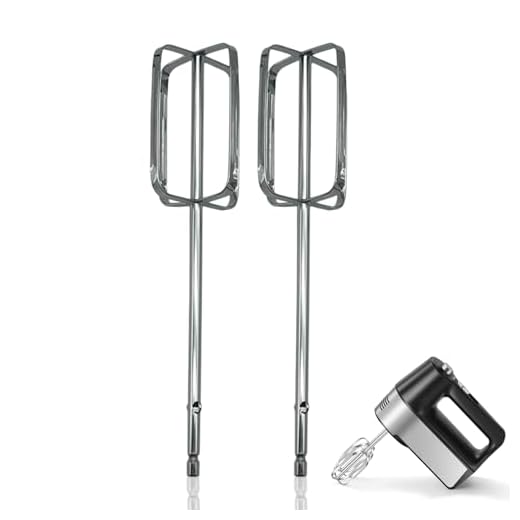
Understanding Mixer Bowl Sizes: Small, Medium, and Large (and What They Mean in Practice)
Usable vs. total capacity
I always judge bowls by usable capacity — the volume you can safely mix without splatter — not the stamped number. A “5‑qt” bowl usually gives ~4–4.5 qt usable. Rule of thumb: subtract ~15–20% for headroom.
Headroom matters for rise and aeration
For whipped cream, meringues, or high‑rise doughs I leave at least one‑third empty. For aggressive whipping (meringue) I aim for half the bowl free so the foam can expand.
Shape and mixing action
Deep, narrow bowls concentrate ingredients for dough; wide, shallow bowls speed whipping. I prefer the KitchenAid Artisan 5‑qt shape for general work and a deeper 6–7 qt for big breads.
Translate capacity into real batches
Quick practical conversions (approx. usable volumes):
- 4–4.5 qt: ~6–8 cups dough — 1–2 sandwich loaves or 1–2 cookie batches.
- 5–6 qt: ~9–12 cups — 2–3 loaves or multiple cookie batches.
- 6–7+ qt: ~12–16+ cups — large bread or batch baking.
Pitfalls to avoid
- Overfill: splatter, poor mixing, stress on motor.
- Underload: uneven mixing; for tiny jobs use a smaller bowl or hand tools.
Attachments 101: What Each Tool Does and When I Reach for It
Flat beater / paddle
The workhorse for cookie doughs, cake batters, and frostings — it folds and scrapes without over‑aerating. Correct use: mixture looks homogenous and slightly lifted; wrong use: gummy, streaky batter or excessive splatter. Clear wins: chocolate chip cookies, buttercream.
Dough hook
Designed for kneading yeast doughs by stretching gluten. Correct use: dough clears the bowl sides and forms a smooth ball; wrong use: loose, shaggy dough or mushy, overworked loaf — and your mixer will hum. Great for sandwich loaves and pizza.
Wire / balloon whisk
For aeration — meringues, whipped cream, mousses. Correct use: fast volume gain and glossy peaks; wrong use: slow, dense results or overwhipped curdling. Use for pavlova and stabilized whipped cream.
Specialty tools: flex‑edge paddles, pouring shields
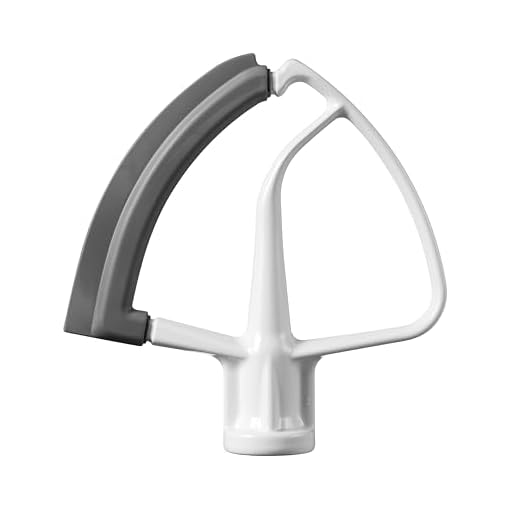
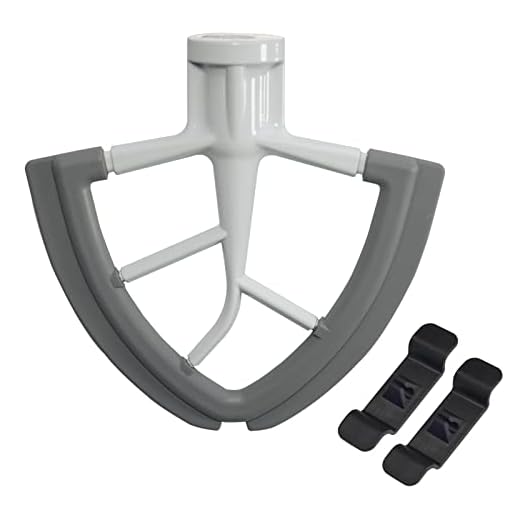
Flex edges scrape while mixing for no‑waste batters; pouring shields keep dry ingredients contained. I reach for these on sticky batters and big batches.
Common mix‑up consequences:
- Using whisk for dough: strains motor, no gluten development.
- Using hook for cake: dense, poorly mixed batter.
Next I’ll map these choices to bowl size and recipes so you pick combos that actually work.
Matching Bowl Size to Recipe and Household Needs: A Practical Decision Tree
Quick decision steps
I ask three questions: What am I making? How often? For how many people? Then I match:
- Breads (yeast/kneaded dough): 5–7 qt for 2+ loaves; 4 qt for single small loaf.
- Cakes and dense batters: 4–5 qt is usually enough.
- Cookies and cookie dough: 3–5 qt depending on batch size.
- Whipped cream/meringues: choose one size up for headroom — 5–6 qt preferred.
Batch frequency & household size
- Daily meal prep or singles: smaller bowl (3–4 qt) saves space.
- Family baking or frequent entertaining: 5–6 qt is my sweet spot.
- Serious hobbyist or big batches: 6–7+ qt.
Scaling, headspace, and when to split
- Leave ~1/3–1/2 bowl free for high-volume aeration (meringue, whipped cream).
- For wet batters, 1/4 free is fine.
- If a recipe would fill >60% of bowl or produce >50% expansion, I run two batches. That keeps motor strain low and results consistent.
Next up: what I check about compatibility, materials, and extras before upgrading.
Compatibility, Materials, and Accessories: What I Check Before I Buy
Fit and mixer type
I first verify attachment fit (model number matters — “fits most” is a red flag). Tilt-head (KitchenAid Artisan) is great for home cooks; bowl-lift (KitchenAid Professional) adds stability for heavy doughs. Check bowl-lock type and whether beaters lock or just drop in — that prevents wobble.
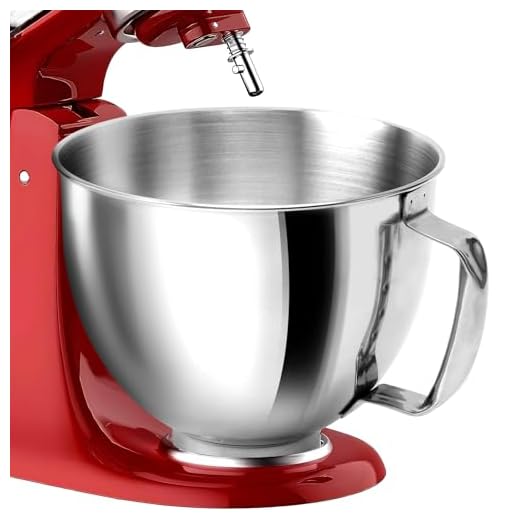
Materials: pros, cons, and real-world effects
- Stainless steel: lightweight, durable, best heat transfer for quick cooling; usually dishwasher-safe.
- Glass: lets you watch mixing, but retains heat and can chip.
- Ceramic: pretty, heavy, retains heat — not ideal for whipping.
Essential accessories I look for
- Splash guard with pour chute
- Extra bowl (for switching tasks)
- Silicone scraper beater or separate bowl scraper for quieter, cleaner mixes
Practical red flags
- Vague compatibility claims, missing bowl diameter/depth, non-removable attachments, and “hand-wash only” labeling when you need dishwasher-safe parts. Next, I’ll cover how to maintain and store these items so they last.
Maintenance, Storage, and Smart Upgrades I Recommend
Cleaning & inspection
I rinse bowls and attachments immediately, soak in warm soapy water, then hand-dry to avoid water spots. Don’t use steel wool or bleach on stainless — that causes pitting and discoloration. For stubborn stains I rub a paste of baking soda + water. Check shafts, splines, and locking tabs monthly; replace if metal thins, bends, or the fit is sloppy.
Storage & organization
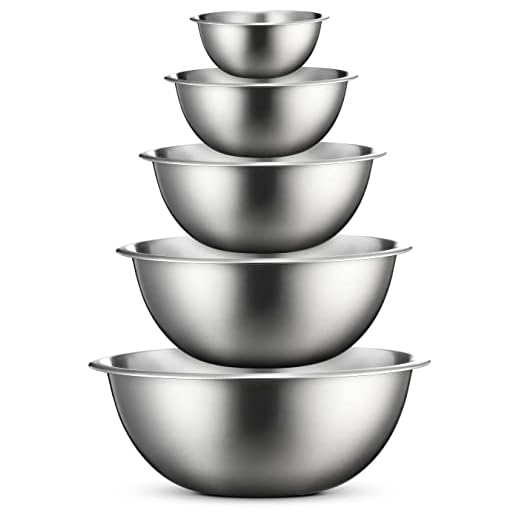
Nest bowls by size, store beaters/hooks in a shallow divided drawer, and hang rarely-used attachments on a pegboard so they don’t get banged. Keep one ready-to-go bowl on the counter if you bake daily.
Smart upgrades I recommend
- Extra-capacity bowl (7‑qt stainless for big batches — useful for holiday bread).
- Heavy-duty spiral dough hook for frequent bread makers.
- Nonstick/silicone-edged paddle (saves scraping time and cleanup).
Skip overpriced “universal” attachments and cheap chrome knockoffs; they wear fast and can damage your mixer.
Quick fixes I’ve used
Uneven mixing: lower bowl height, slow speed start, scrape mid-cycle. Wobble: clean the hub, reseat or replace worn adapter/bushing. These small checks save costly repairs.
Now I’ll wrap up with my bottom line and buying advice.
My Bottom Line: How I Choose the Right Setup for You
I boil it down: choose a bowl that fits typical batch size, pick attachments you’ll actually use, and prioritize compatibility and storage. Small for singles, medium for families, larg