
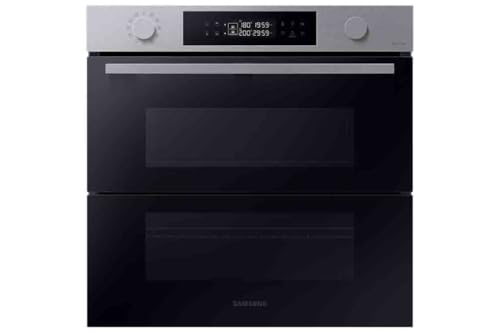
Why I Taught My Oven to Cook Like Me
I love cooking, but even I get tired of babysitting timers and guessing temperatures. I wanted an oven that understands my taste and routines and delivers a great meal every time.
My goal was simple: create an AI-assisted oven that learns how I cook so I can get consistently delicious results without micromanaging. I cook lots of roasted vegetables, sheet-pan dinners, and simple breads, so personalization mattered.
The practical wins I expected were clear: less wasted food, faster weeknight meals, and the quiet joy of an oven that truly gets me.
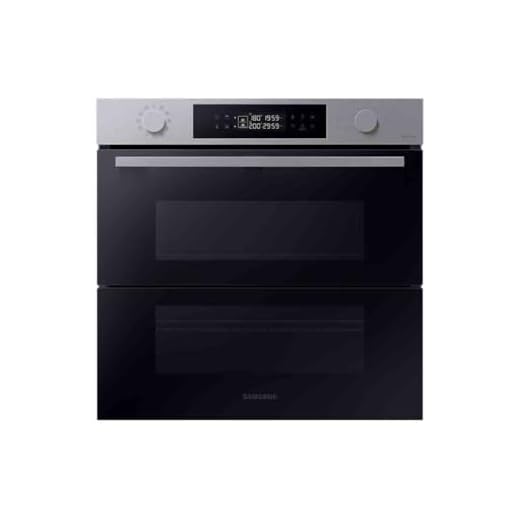


Setting the Goal: Defining What ‘Cooking Like Me’ Actually Means
Turning taste into measurements
“Cook like me” is poetic but useless for engineering. I started by listing the sensory outcomes I care about and translating each into a measurable target. That meant turning words like “crispy” into surface temperature and time, “doneness” into internal temperature bands, and “balanced spice” into recipe ingredient ratios.
My taste priorities
- Crispness on roasted edges (target: 200–220°C surface, 10–15 min blast for veggies)
- Doneness levels (rare/med/well mapped to precise internal °F/°C)
- Texture preferences (moist crumb vs drier crust for breads)
- Spice balance and salt tolerance (ingredient percentage guidelines)
Choosing success metrics
- Internal temperature targets (primary objective for proteins)
- Visual cues captured by camera (browning index)
- Time-to-completion and energy used (efficiency)
- User satisfaction scores (quick thumbs-up/redo feedback)
Constraints I imposed
- Safety: auto-shutoff above set thresholds and fire detection
- Speed: weeknight modes that favor time over perfect sear
- Energy: prefer convection cycles that save kWh when possible
Prioritization: everyday vs special dishes
For daily meals I prioritized reliability and speed — consistent roast, reliable internal temp. For special dishes (sourdough, holiday roast) I allowed longer training cycles and manual overrides. Getting those priorities right up front saved countless retraining loops and kept development practical as I moved on to training the model.
Gathering the Right Data: My Recipes, Sensors, and Feedback
What I recorded
I built a simple schema and stuck to it: annotated recipes, step-by-step photos, short voice/text taste notes, and synchronized sensor logs (air temperature, chamber humidity, weight, probe temps, and timing). For cameras I used a Raspberry Pi Camera v2 for top-down timelapse and a Wyze Cam for close-ups; for environmental sensing I relied on a BME280 and a DS18B20 probe, and a small HX711 load-cell under my cutting board for quick weight checks.
How I labeled outcomes
Labeling was binary-simple at first: Loved / Okay / Hated — with a short reason tag (too dry, underdone center, uneven browning). Example: my weeknight roast chicken got “Okay — browned edges, dry breast.” Those short notes guided targeted changes much faster than long essays.
Balancing quantity vs quality
I aimed for 300–500 well-labeled examples before widening breadth. Early on I prioritized high-quality, fully documented cooks over mass scraping. A few carefully labeled failures taught the model more than dozens of bland successes.
Privacy and organization
All recipes and notes lived in an encrypted Git repo (private) with recipe metadata separate from photos. I hashed identifying names and backed up to an encrypted drive.
Continuous collection workflow
I automated: a kitchen tablet prompts me to start a session, tethers sensors to a timestamped folder, and asks a quick thumbs-up and one-sentence note after eating. That daily loop made learning automatic — and surprisingly painless.
Training My Oven: Models, Algorithms, and Iterative Feedback
Start simple: predict temperature and time
I began with lightweight predictive models — linear regression and a small gradient-boosted tree — to estimate bake time and setpoint from inputs (weight, humidity, recipe type). These models gave fast, interpretable suggestions I could eyeball and override. That low-risk baseline prevented wild experiments and made debugging obvious: if a roast finished 10 minutes early, I could trace which feature misled the model.
Layering adaptive behavior
Once the predictors were reliable, I added an adaptive loop: after each bake I recorded my reward signal (Loved/Okay/Hated) and the sensor trace. A simple contextual bandit adjusted oven parameter increments (±5–15°F, convection on/off, time shifts) to maximize reward while staying inside safe bounds. Periodically I retrained the supervised model with new examples to shift its priors.
Simulate, then scale with kitchen trials
Before risking a pricier roast, I ran “digital twin” simulations — temperature diffusion approximations and short trial bakes using cheaper cuts. That cut costly failures. Real trials were always small batches, probe-first, then full bakes once confidence rose.
Measuring improvement & practical trade-offs
I tracked: Loved-rate, mean absolute error of predicted vs actual core temp, and variance in browning. Tip: favor stability over marginal gains. Complex neural nets nudged performance 2–3% but increased brittleness and latency; simpler models won for day-to-day reliability.
Quick how-to checklist
- Start with interpretable models.
- Constrain actions to safe ranges.
- Use short simulations and cheap trials.
- Log rewards and retrain often.
Making It Real: Hardware Integration, Sensors, and Safety
Choosing and calibrating sensors
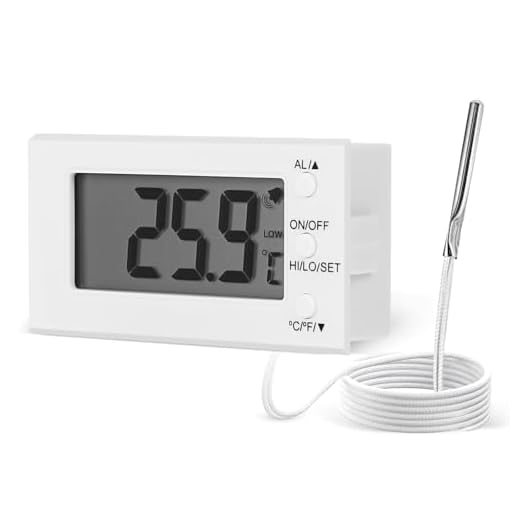
I picked a mix: K-type thermocouples for oven air and racks, a contact probe for cores, an IR sensor (MLX90614-style) for surface browning, and an SHT31 humidity sensor for steam-conscious bakes. Calibration was hands-on:
- Ice-bath (0°C) and boiling-water checks for thermocouples.
- Spot-check core probes against a trusted handheld thermometer.
- For the IR sensor I used a piece of matte black tape as an emissivity target — the readings lined up after setting emissivity to ~0.95.
Actuators and control
I controlled mains heating with a properly sized SSR (solid-state relay) and used a triac-based dimmer for older elements. Fans run on PWM via a MOSFET and the rack motor uses a small stepper with a driver board. Practical tips:
- Keep thermocouple leads twisted and away from mains wiring.
- Use opto-isolators between MCU and high-voltage sections.
- Derate SSRs and add snubbers for inductive loads.
Safety, redundancy, and practical wiring
I built multiple layers: hard thermal cutout (mechanical thermostat), software watchdog that drops power if comms fail, manual kill switch, and alerts to my phone. Conservative defaults mean the oven favors undercooking over overheating. I also added:
- Fuses and a GFCI-protected circuit.
- Physical cable grommets, high-temp silicone, and an IP-rated electronics enclosure.
- Local manual control and an obvious red switch for handovers.
These choices made the system reliable in daily use and easy to fix when something inevitably needed tweaking.
Living with an AI Oven: Day-to-Day Use, Tuning, and Lessons Learned
Daily workflow: instructions and feedback
I usually tell the oven the dish and my target (e.g., “crispy-skinned roast chicken, medium juices”). I give quick feedback after the first run: a thumbs-up, “less brown,” or a short voice note about moisture. That lightweight labeling taught the model my tolerances — the roast chicken’s skin improved from patchy to uniformly crisp in three cycles.

When it’s confidently wrong
When the oven insists on a setting I dislike, I hit manual override, take a core reading, and either rollback to the saved “baseline” profile or create a corrective label (“too dry: -15°F, +5 min rest”). If it misinterprets taste (it once over-browned my rye loaf), I save the outcome, tag the dataset with why it failed, and schedule a quick retrain.
Quick tuning tricks
- Add a per-recipe temp offset (+/−10°F) instead of retraining for small preferences.
- Use a short “micro-retrain” on 5–10 new labeled examples for rapid adaptation.
- Bump browning threshold or shorten fan cycles when crust forms too fast.
Maintenance & retraining cadence
- Weekly: probe zero-checks and visual sensor inspection.
- Monthly: export logs and re-label edge cases.
- Quarterly: retrain with the expanded dataset and snapshot configs.
- Annually: replace high-use probes and update firmware.
UX and keeping control
I get push notifications (preheat, five-minute rest), integrate recipes from my app, and keep an “experiment mode” that guarantees full manual control. These small UX tweaks keep the system helpful without stealing my kitchen joy — now, onto reflections and next steps.
Reflections and Next Steps
I distilled the project into five essentials: clear goals, high‑quality data, pragmatic models, careful hardware integration, and continuous feedback. Those pillars let my oven learn my timing, seasoning, and tolerances without overfitting to a single recipe. Trade‑offs were real — convenience sometimes costs control, and automation can nudge rather than replace creativity.
If you want to try this, start small: pick one signature dish, instrument it, iterate with simple models, and keep safety first. With modest effort and steady tuning, an AI-assisted oven can become a trusted cooking companion that reproduces your personal touch. and evolve.


31 comments
Sam Brooks
Short take: I want one. Lived experience beats articles — any tips for someone starting DIY — cheap sensors to begin with? I’m eyeing a TempSpike 150M.
DanCC
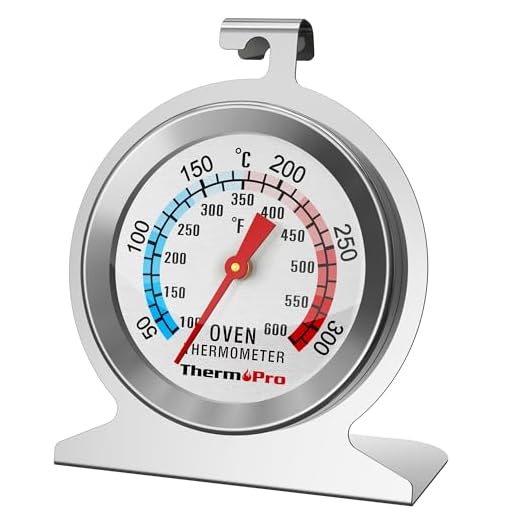
Start with one reliable probe (TempSpike 150M is a solid pick) and a simple oven gauge like the ThermoPro Stainless Dial to get baseline readings. Keep the first model simple: mapping time/temp -> doneness score with manual labels.
Maya Thompson
Loved this — the idea of teaching an oven my taste is wild in the best way. I’m curious: did you lean more on the Samsung Dual Cook Flex’s built-in features or did most of the learning happen off-board? Also, big fan of using a foldable probe (I have a DOQAUS) to double-check doneness — seems like a no-brainer for an AI oven training loop.
DanCC
Great q! I used the Samsung mostly for its reliable control API, but the heavier model training (taste/profile adjustments) ran off-board. The DOQAUS probe was invaluable for objective labels — it cut down a lot of guesswork.
DanCC
I used the probe for the first 30-40 experiments per recipe, then intermittently for calibration. For safety-critical items (poultry, large roasts), I still probe every time.
Carlos Reyes
Nice — can you share how often you used the probe vs. trusting internal oven readings? I’m paranoid about undercooked meat 😅
David Chen
Fascinating and kinda scary. A few safety-oriented concerns: how did you ensure the oven wouldn’t try aggressive shortcuts (like higher temps for faster results) that could create hotspots or fire hazards? Also, did you ever need to pull the plug on a trained policy because it started behaving oddly? Would love details on the hardware interlocks and alarms (I saw you mentioned LXSZRPH and ThermoPro devices — did any of them trigger safety shutdowns automatically?).
DanCC
Exactly — AI controls taste, but rules control safety.
DanCC
Good concerns. We layered hard safety interlocks: max-temp hardware cutoffs, thermal fuse monitoring, and watchdog timers. The LXSZRPH alarm and TempSpike alerts were integrated into the safety controller to pause or abort runs if temps deviated dangerously. We did roll back one policy that increased surface charring due to a sensor bias — the safety layer caught it before it became hazardous.
David Chen
Thanks — that makes me less nervous. Sounds like redundancy + rules is the right approach.
DanCC
We used cross-sensor agreement checks (probe vs. oven gauge vs. ambient probe) and sudden shifts in residuals vs. expected profiles. If one sensor drifted beyond thresholds relative to the others, we quarantined its data and triggered recalibration.
Laura Kim
What markers did you use to detect ‘sensor bias’? I’d like to set similar rules for my setup.
Owen Price
Ha — teaching an oven to cook like me feels like teaching coffee to be as bitter as my ex. Jokes aside, this is brilliant. If it can learn to stop drying out chicken like I do, I will worship technology. Did you do any user-feedback loop where guests rate meals? 😂
Owen Price
Priya, pls don’t weaponize my lasagna 😂
DanCC
Hah — yes, we did a small human-in-the-loop feedback process. Guests gave quick 1–5 taste/texture scores after meals and short notes; those labels were surprisingly informative for tuning.
Priya Nair
That’s genius. Crowdsource taste-testing — could even A/B different model versions on guests without telling them 😈
DanCC
We randomized versions but always within the safety constraints — no experiment that risks undercooking.
Hannah Lee
Quick Q: did you integrate multiple thermometers (ThermoPro TP16, LXSZRPH) at once or test them separately? I’ve got a TP16 and wonder if combining sensor inputs is worth the extra complexity.
Laura Kim
Solid article. A couple of practical notes: calibrate your oven with the ThermoPro Stainless Dial before trusting the AI, and always have a LXSZRPH or TP16 as a redundant probe for critical cooks. Also — document every failed experiment. Those pain points teach you more than the wins.
Priya Nair
Agree on the fail-logs. They also help with debugging sensor drift vs model misbehavior.
DanCC
Absolutely — documented failures were our best teachers. The redundancy saved a roast or two from being ruined.
Priya Nair
Really enjoyed the tech details. A few things I’m curious about: how did you handle privacy and data storage for recipe variations (I often tweak family recipes and wouldn’t want them sent off somewhere)? Also, did you use the ThermoPro Stainless Dial as a calibration baseline, or was that just a backup tool? Finally — any plans to open-source the dataset or model (even anonymized)?
DanCC
Privacy was a priority: local-first storage, optional cloud sync only for opted-in users, and recipe diffs were anonymized. The Stainless Dial was used as a quick visual calibration check during hardware tests, not as a primary sensor in the loop. As for open-sourcing — I’m planning to release a sanitized dataset and a smaller model checkpoint in the next few months.
DanCC
Thanks — I’ll post an update in the reflections/next steps section when it’s ready.
Sam Brooks
Local-first sounds perfect. Would love to try the dataset when it’s out!
Laura Kim
If you open-source, consider adding a demo with the ThermoPro TempSpike and LXSZRPH for reproducibility. Hardware variance is the sneaky part.
DanCC
Good call — hardware configs and recommended calibration steps will be included.
Priya Nair
Thanks for answering — that local-first approach makes me much more comfortable. Looking forward to the release 👍
Carlos Reyes
Interesting read but I kept waiting for more on failure cases. Like, what happens when the oven “learns” a bad habit (burning edges, weird browning)? Did you have rollback/versioning for models? Also, ThermoPro TempSpike seems perfect for continuous monitoring — did you use anything like that to detect drift?
Hannah Lee
Love the safety layer idea. Makes me feel better — don’t want my oven getting ‘creative’ with my lasagna 😬
DanCC
Totally — we had model checkpoints and a simple rule-based safety layer to reject changes that increased burn-rate metrics. The TempSpike was used for time-series drift analysis; it flagged ambient/sensor changes that required recalibration.